Highlights from the Week's News
This Week in Water™ airs on community and public radio stations nationwide and is available on podcast networks. Want environmental news delivered to your inbox? Sign up for our newsletter.
Plants Get Sweeter When They "Hear" Bees
May 25, 2025
Is the National Weather Service Prepared for Hurricane Season?
The 2025 Atlantic hurricane season starts June 1, and forecasters say that while they don’t think it will be as damaging as 2024—the third costliest on record—they are expecting more storms than normal because of warmer than average ocean water, which contributes to storm formation.
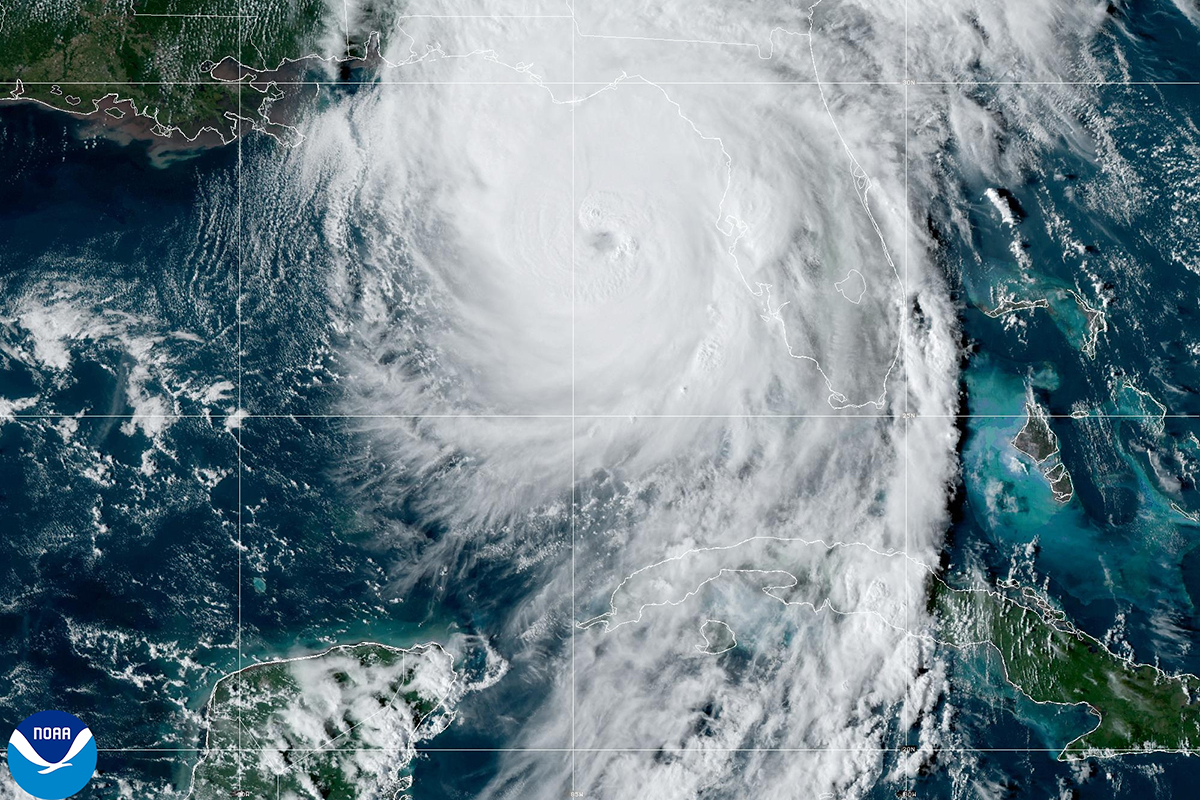
A satellite image of Hurricane Helene approaching landfall on September 26, 2024. | Credit: NOAA/NESDIS/STAR GOES East
Experts at the National Weather Service are predicting 13 to 19 named storms with six becoming hurricanes and up to five reaching the highest level of danger with winds of more than about 110 miles per hour. A study published last week shows that there is an increasing risk of loss from severe wind and water damage that occurs during hurricanes, and the danger could go up as much as 76 percent by 2060 for states in the Southeast.
The Weather Service, part of the National Oceanic and Atmospheric Administration (NOAA), has suffered huge job cuts by DOGE, the Department of Government Efficiency. Laura Grimm, NOAA’s acting administrator, said at a news conference in Louisiana last week that the Hurricane Center is fully staffed because it’s a top priority for the Trump administration.
However, cuts in other areas of NOAA have already reduced weather balloon launches, which affect the ability to predict severe weather, including tornado-producing thunderstorms. The reduced staffing has left some offices with no forecasters overnight. That could affect preparedness for tornadoes. This year, the country is on track to experience more tornadoes than last, which was the second busiest on record. Last week, strong storms struck from Kansas to Kentucky, and the Weather Service office in Jackson, Kentucky, was closing nightly after cuts by DOGE. However, staffers were kept overtime during a deadly tornado that killed 20 people in that forecast area. The New York Times reports that the Weather Service work force of 4,000 people has lost almost 600, in two critical areas—collecting data and then warning the public when danger approaches.
Concerned about staff shortages, the inability to hire meteorologists, and attempts by the agency to relocate some employees, the weather and climate community is sounding the alarm. Starting on Wednesday May 28, they will hold a five-day Weather and Climate Livestream, where scientists will give 20-minute presentations in which the public can interact.
When Plants "Hear" Bees, They Sweeten Their Nectar
Is it possible that plants react to the sounds and vibrations insects make as they flap their wings, hover, land, and take off? A new study says plants do and they increase their nectar production in response.

A bee visits a snapdragon | Credit: Hartono Subagio/Pixabay
Francesca Barbero of the University of Turin and her colleagues, including sound engineers, entomologists, and plant physiologists, made sound recordings of buzzing pollinators, in this case the snail shell bee (Rhodanthidium sticticum), and played them near snapdragons. The scientists learned that the flowers increased both the amount of nectar and its sugar content when the bee sounds were played nearby. Further, the snapdragons changed their gene expression, especially those used in sugar transport and nectar production.
Being able to discriminate approaching pollinators by their vibroacoustic signals could be an adaptive strategy to improve a plant’s reproductive success, Barbero said. This would depend upon the response of the bee to the plant’s changes. In the past, the relationship between plants and pollinators has been studied primarily through smells and visual cues like color, but Barbero says there is growing evidence that both insects and plants can sense, produce, and transmit signals through vibrations and sounds.
The study shows that while it’s clear the buzzing can trigger a plant’s reaction, it isn’t so clear whether a plant’s acoustic signals can influence insect behavior, like whether the noise a snapdragon makes can attract a pollinator.
How Penguins Might Help Slow the Effects of Climate Change
Antarctic ecosystems are stressed. Global warming is accelerating sea ice decline and shrinking ice shelves, which affects not only local wildlife but also climate patterns across the planet. One unlikely hero to help slow these effects is about two-and-a-half-feet tall, a great swimmer, and has a tuxedo-like appearance.
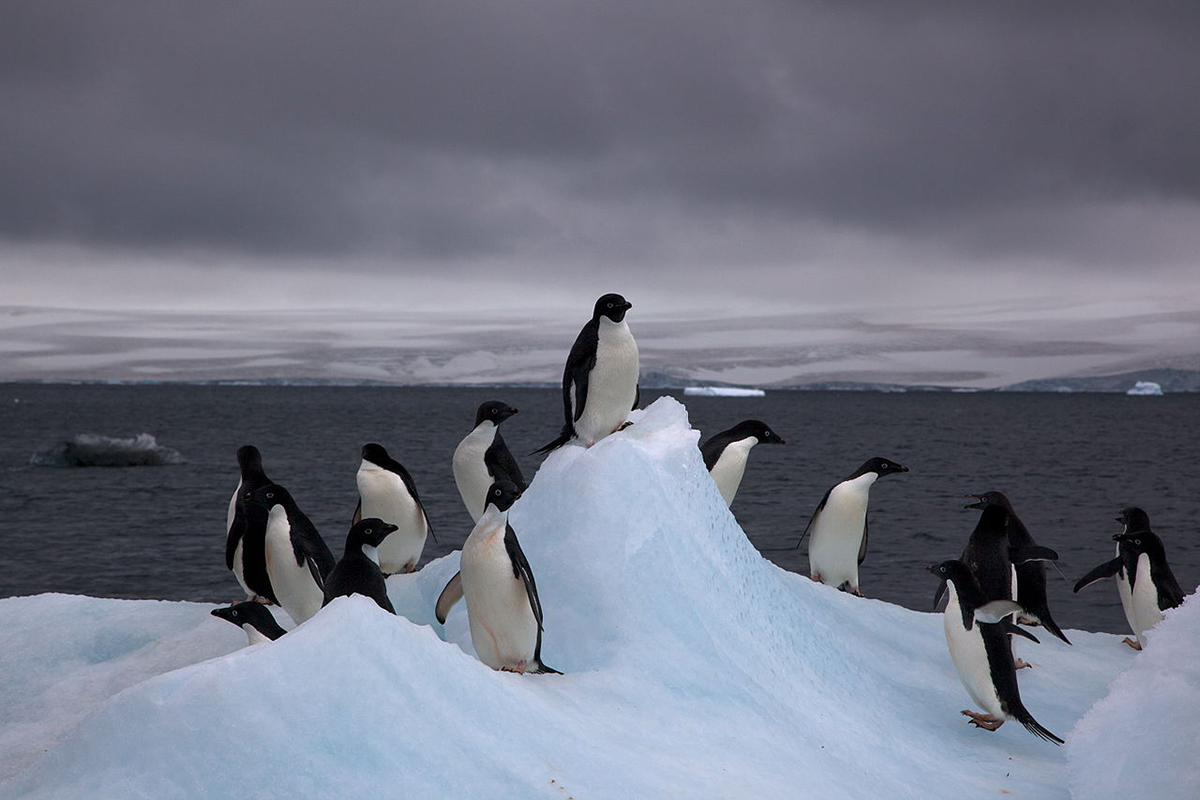
Adélie penguins (Pygoscelis adeliae) | Credit: Jason Auch/Creative Commons
Adélie penguins (Pygoscelis adeliae), which themselves could fall victim to shifts in Antarctica, may help to reduce the effects of climate change through their guano. The penguin poo contains significant amounts of ammonia, which plays a role in cloud formation, according to a new study. More clouds could help reduce surface temperatures and slow sea ice loss by reflecting sunlight back into space.
The discovery came from a team of researchers at the University of Helsinki who were studying a colony of Adélie penguins near Marambio Base, Antarctica. They say ammonia gas emitted from the guano reacted with sulfur gas produced by phytoplankton in the ocean to form aerosol particles upon which water vapor could condense to create clouds.
The scientists observed that after a strong wind blew across their study site where around 60,000 penguins were gathered, the number and size of aerosol particles sharply increased. Three hours later, fog emerged. While ammonia was already understood to contribute to cloud formation, it was unexpected to be found in the Antarctic, where there’s not a lot of decaying organic matter like vegetation.
More study is needed to fully understand the penguins’ impact on cloud formation and temperature, but if the birds are helping to mitigate climate change, they are protecting not only their own habitat but also ours.
The study was published in the journal Communications Earth & Environment.
Shrinking Nemo? Clownfish Get Shorter During Marine Heatwaves
Marine heatwaves—periods of persistent warm ocean waters—are increasing and becoming longer and more intense because of global warming. These extreme climatic events threaten vulnerable marine life, which must adapt or perish. And, according to a new study, one fish has a plan.
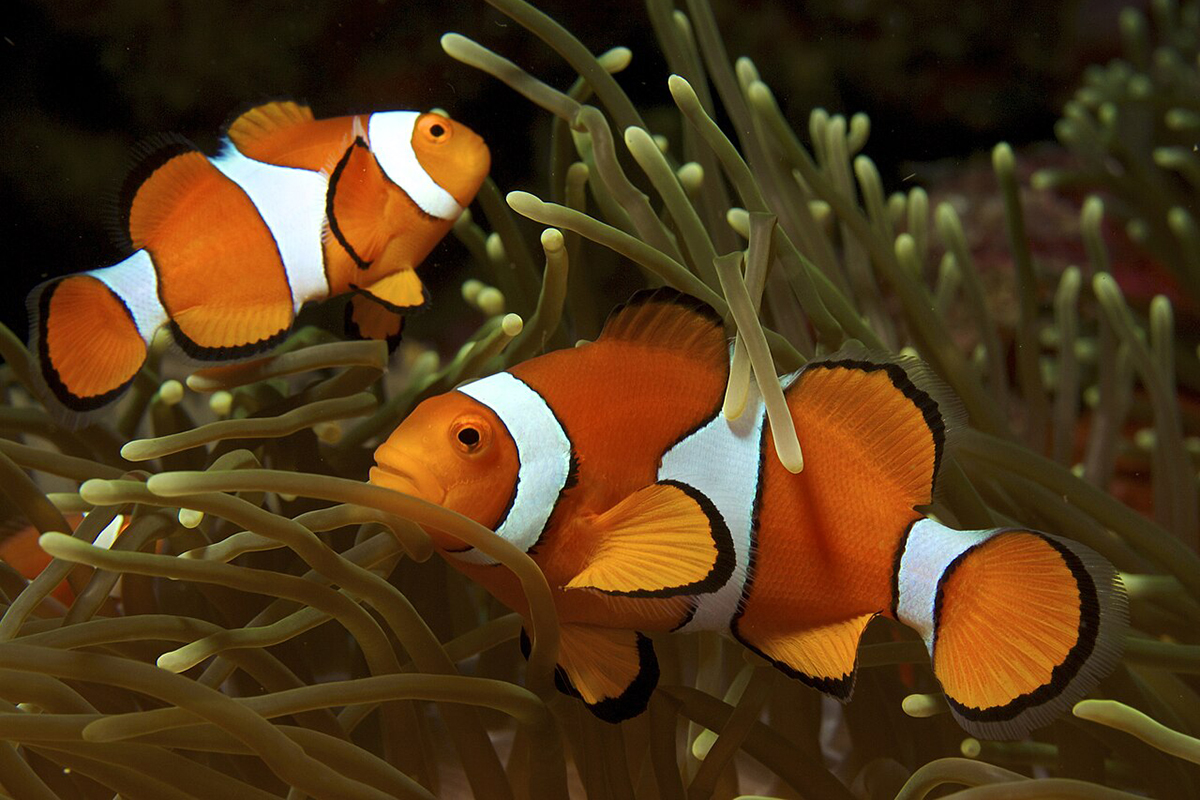
Clown anemonefish (Amphiprion percula) | Credit: Nick Hobgood/Creative Commons
The clown anemonefish (Amphiprion percula) made famous in the movie Finding Nemo, shrinks to improve its chances of survival when the water gets too hot. Researchers from Newcastle University’s School of Natural and Environmental Sciences studied a wild population of the reef fish—recognizable for their orange and white stripes—in Kimbe Bay, Papua New Guinea, during a marine heatwave in 2023, which coincided with the world’s fourth global coral bleaching event, which caused temperatures in our study area to exceed the long-term average by 4°C.
They found that the clownfish would get shorter as temperatures rose, the first time a coral reef fish has been found to shrink in response to environmental conditions. In the study, 100 of the 134 fish they measured reduced their length, which increased their chances of surviving the heat by up to 78 percent. (At first, they didn’t believe the results, so they measured each fish repeatedly over a period of five months.) The authors say that shrinking helps the fish decrease their metabolic needs. Heat stress events can reduce food supplies and warmer ocean waters have less oxygen—two reasons it would be better to be small.
There are downsides to shrinking. Smaller fish lay fewer eggs and that could decrease birth rates at a time when many marine species are already experiencing population declines from overfishing, pollution, habitat destruction, and climate change.
Also, the clown fish aren’t the only creatures to become smaller during hard times. A few other animals do too, like marine iguanas, which reabsorb some of their bone material during periods of environmental stress.
In an interesting observation, the team found that if the clownfish shrank at the same time as their breeding partner, they both had a higher chance of survival because it reduced social conflict between the two where females are generally bigger and dominant.
Sounds like a potential plot for a future sequel called Finding Nemo—Climate Change Edition. “Clownfish that shrink together, stay together.”
The study was published in the journal Science Advances.